Field Notes — New Brunswick
Magnetic Hill: The Road That Rolls Uphill
In Moncton, New Brunswick, you stop the car, shift into neutral — and roll uphill. Magnetic Hill has been happily fooling drivers since the 1930s.
The Short Answer
Magnetic Hill is a rural road at the northwestern edge of Moncton, New Brunswick, at the foot of Lutes Mountain. Drivers stop at the marked spot, shift into neutral, and appear to roll uphill because the surrounding slopes hide the true horizon and make a gentle descent read as a climb. It became a sensation in 1933 and remains a stop where visitors can test the illusion in their own car.
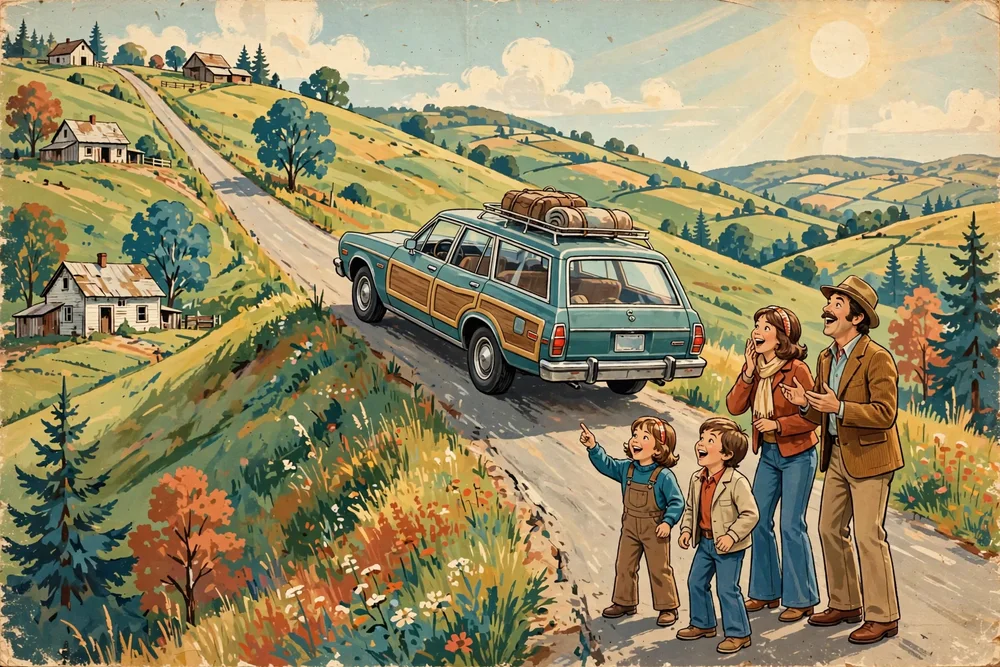
There is a stretch of road outside Moncton where your car will break the oldest rule you know. Stop at the bottom of the hill. Shift into neutral. Take your foot off the brake.
And roll — gently, unmistakably — uphill.
Your eyes will swear to it in court. So will everyone else’s. Generations of perfectly sensible Canadians have driven out to Magnetic Hill, watched their own station wagons climb a slope with the engine doing nothing at all, and driven home grinning. It is one of the most beloved roadside wonders in the country, and here is the best part: it’s a trick. A glorious, honest, landscape-sized trick — and knowing exactly how it works doesn’t spoil it one bit.
Put It in Neutral
The experience is beautifully simple, which is why it has survived every era of roadside entertainment. No motor, no hidden machinery, no one pulling your car with a rope from the bushes. Just a quiet rural road at the foot of Lutes Mountain, a painted starting point, and gravity — or what looks exactly like gravity misbehaving.
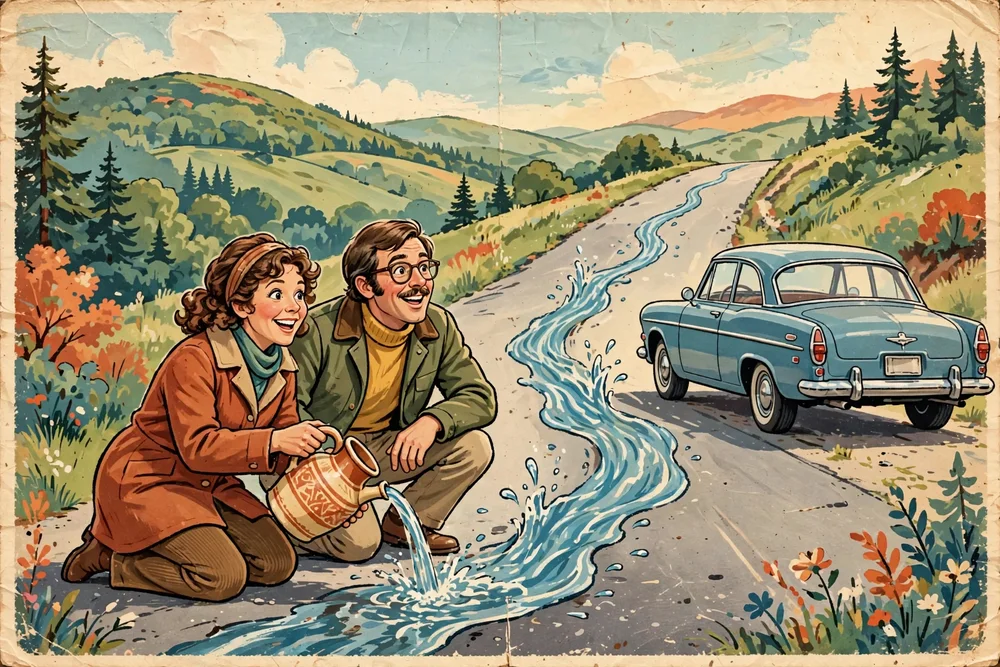
Cars roll “up.” So do bicycles. Pour water on the pavement and it streams the wrong way too, pooling toward what your eyes insist is the high side of the road. Kids get out and push empty strollers. Grown adults, having rolled up once, turn around and do it again, slower, watching for the seam in the illusion. There isn’t one. That’s the show.
The Trick, Honestly
Magnetic Hill is a gravity hill — a place where the land itself lies to you. The secret is everything around the road. The surrounding slopes rise and fall at angles that hide the true horizon, and your brain, deprived of a level reference point, quietly re-draws the scene: what is actually a gentle descent reads as a climb. Your car is rolling downhill the whole time. It’s rolling downhill so convincingly uphill that your inner ear and your eyeballs end up in a friendly argument.
This is why the illusion is wonderful rather than disappointing. Nobody built it. No showman rigged it. The hills of New Brunswick simply arranged themselves, over a very long time, into a perfect practical joke — and all anybody had to do was notice.
From a Farm Secret to a Front Page
Local farmers knew the road was peculiar back in the 1800s, when it was little more than a cart path skirting Lutes Mountain. Horses and wagons behaved oddly there, and the story passed around the way good stories do — locally, and with relish.
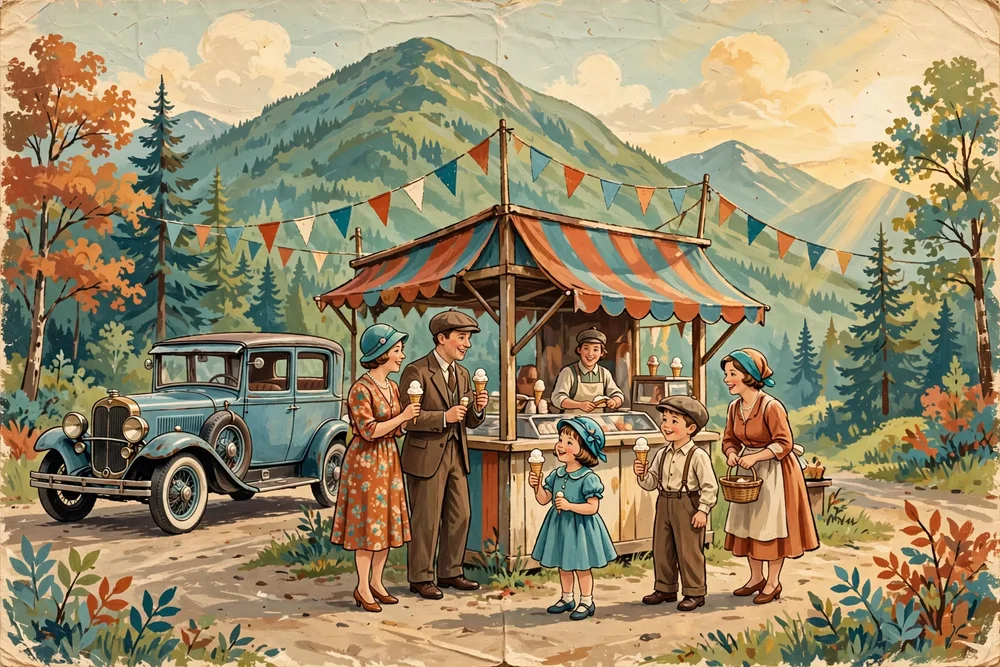
Then, in August 1933, the road got its big break. John Bruce, editor of Saint John’s Telegraph-Journal, drove it with reporters Stuart Trueman and Jack Bayley, and the newspaper splashed the strange hill across the page. A Maritime sensation was born almost overnight. A local woman, Muriel Lutes, saw what the hill could become: she and her husband Lou Sikorsky welcomed the crowds, selling ice cream and souvenirs to the steady stream of the bewildered. The hill went on to be counted among Canada’s most-visited natural attractions — a farm-country oddity with genuine star power.
The hill never claims to be magic. It just lets your own eyes do the claiming.
Worth the Drive
Plenty of attractions promise to defy the laws of physics. Magnetic Hill actually hands you the keys and lets you test them yourself, in your own car, for the price of a little humility. You’ll arrive a sceptic, roll uphill twice, buy the postcard, and spend the rest of the drive explaining the horizon trick to your passengers — who will nod politely, the way you did, right up until their turn behind the wheel.
Common Questions
Where is Magnetic Hill?
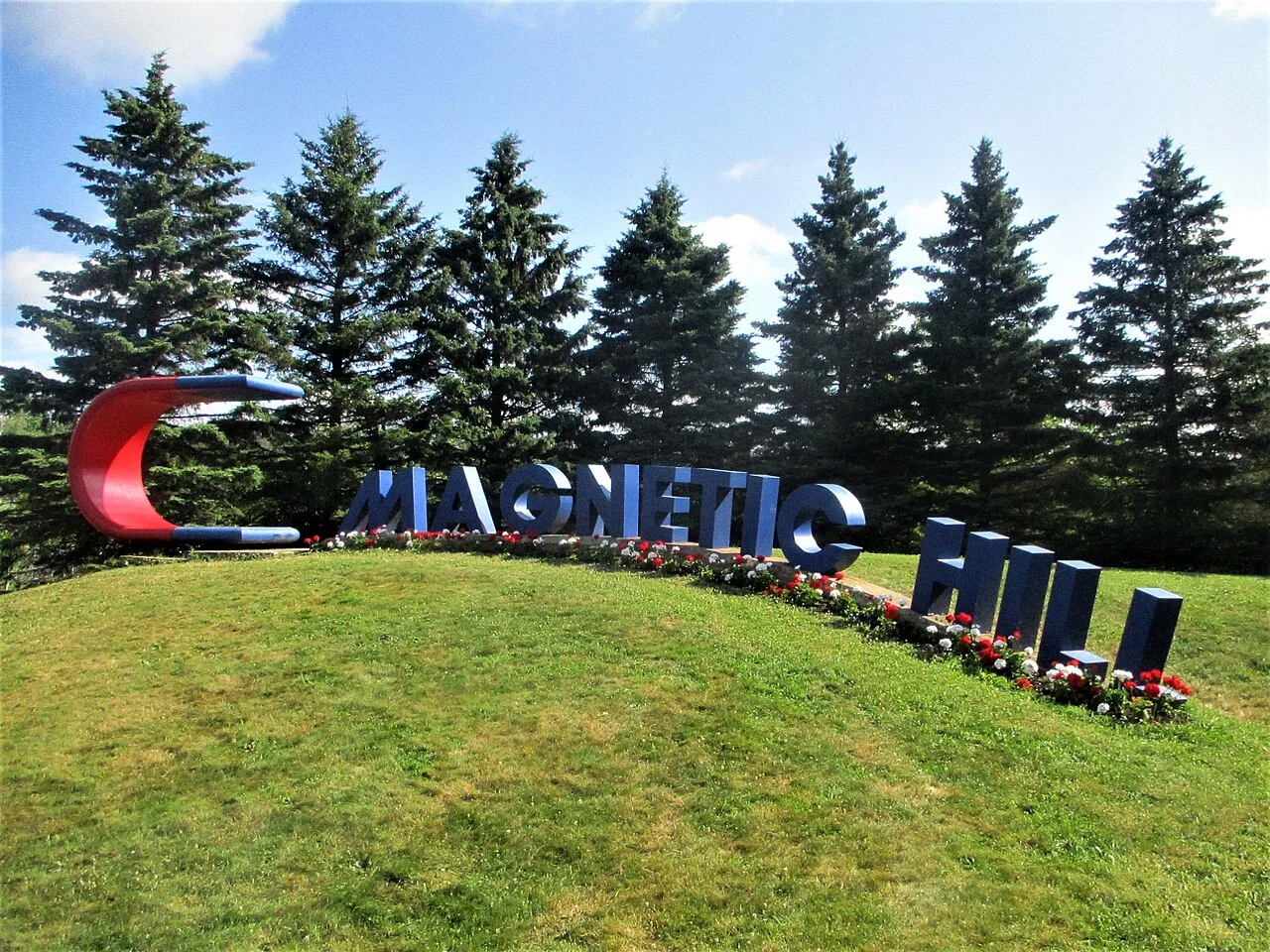
Magnetic Hill is at the northwestern edge of Moncton, New Brunswick, at the foot of Lutes Mountain. Signs for the hill start well before drivers arrive.
How do visitors try the Magnetic Hill effect?
Stop at the marked spot, shift into neutral, take your foot off the brake, and watch the car appear to roll uphill. The article also notes that bicycles and poured water seem to move the wrong way.
Is Magnetic Hill really magnetic?
No. It is a gravity hill: surrounding slopes hide the true horizon, so a gentle descent is misread by the brain as a climb. Knowing the trick does not spoil the effect.
When did Magnetic Hill become famous?
Local farmers knew the road was peculiar in the 1800s, but it became a Maritime sensation after newspaper editor John Bruce and reporters drove it in August 1933. The article calls it a seasonal stop, best in summer and fall.
The Real Thing
More Strange Stops
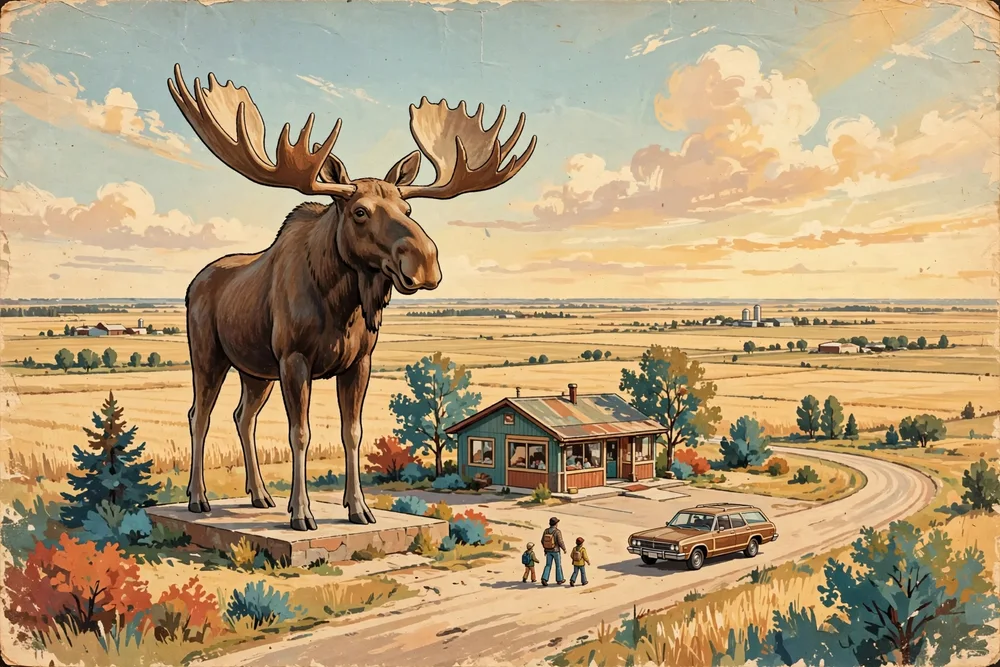
Mac the Moose
Moose Jaw's Mac the Moose has watched the Trans-Canada Highway since 1984 — and when Norway built a taller moose, Saskatchewan answered with bigger antlers.
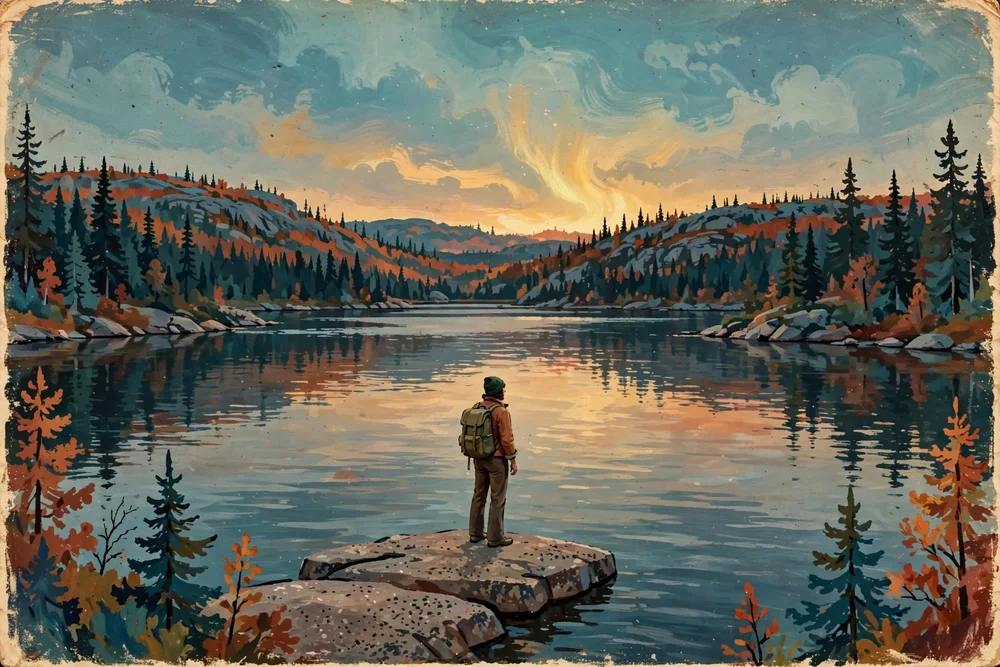
Falcon Lake: Canada's Strangest UFO Story
In 1967, a Winnipeg prospector walked out of the Whiteshell woods with grid-pattern burns and a story he never changed. You can still hike to the rock.