Field Notes — Ontario
The Big Nickel
Sudbury, Ontario keeps its spare change on a hill: a nine-metre stainless-steel nickel built by one stubborn firefighter above a city mined from rock.
The Short Answer
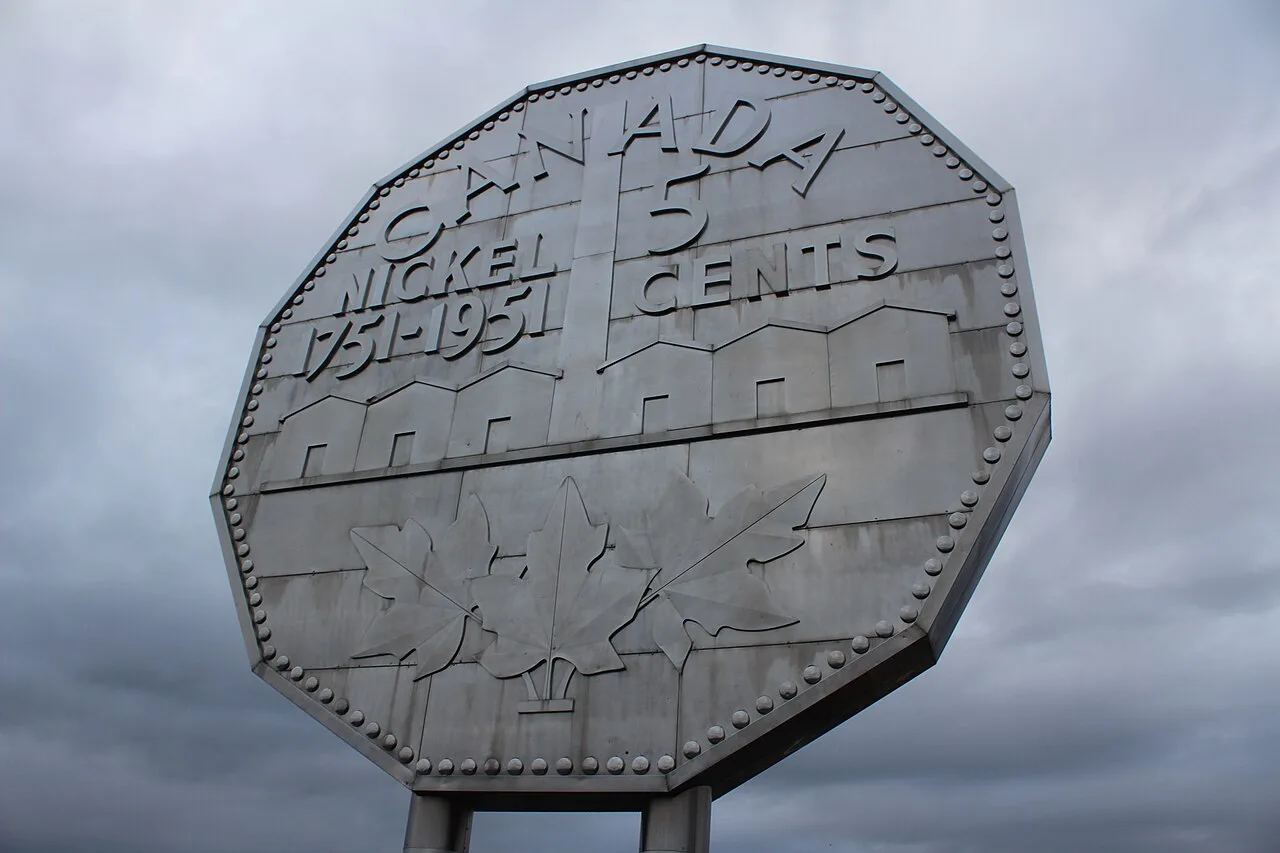
The Big Nickel is a nine-metre (about 30-foot) stainless-steel replica of the 1951 Canadian five-cent piece at Dynamic Earth in Sudbury, Ontario. It was unveiled on July 22, 1964, after firefighter Ted Szilva pushed the mining monument through despite doubters and tight money. Visitors can walk around and under the outdoor coin for free and read both the king's portrait and the refinery side.
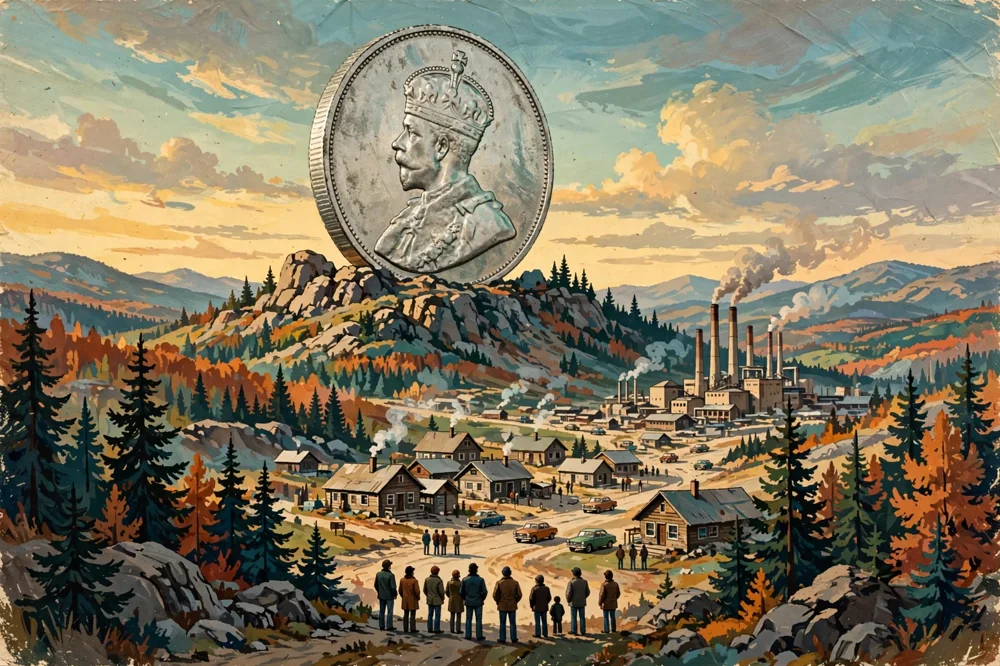
Most towns put their founder on a plaque. Sudbury put its paycheque on a hill.
Above the city’s west end, standing on edge like a coin about to be spent, is the Big Nickel: nine metres — about thirty feet — of stainless steel, an exact giant copy of a Canadian five-cent piece. It has been watching over Sudbury since 1964, and it is still the first thing anybody asks about when you say you’ve been.
Nine Metres of Five Cents
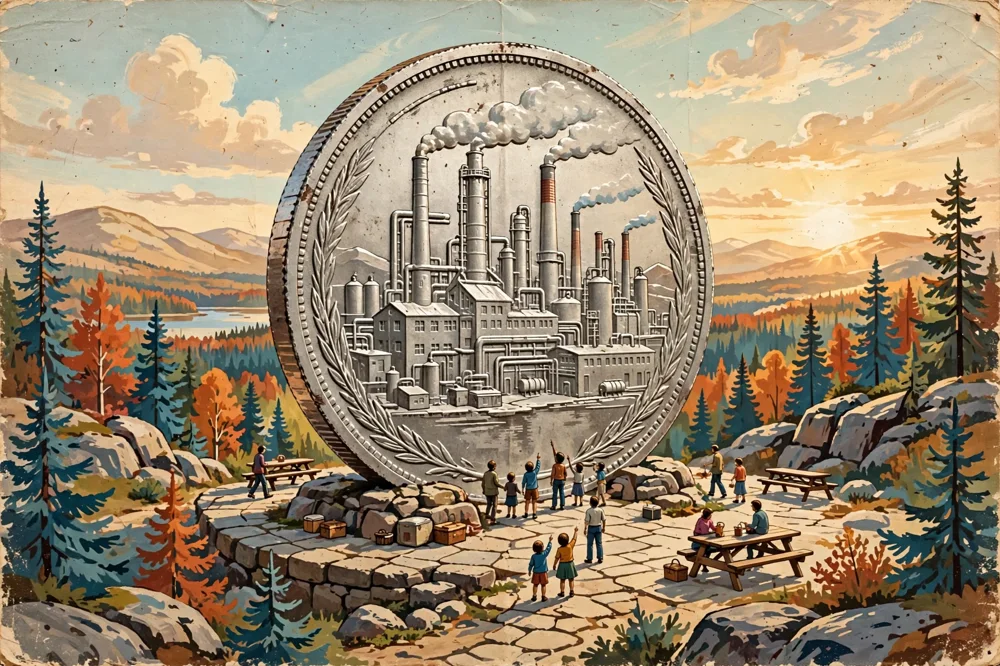
The Big Nickel is a replica of the 1951 Canadian nickel, right down to the details. King George VI holds one face; the other carries a nickel refinery, ringed by a wreath — the same design Canadians carried in their pockets by the millions.
The 1951 coin was a special one. It was struck to mark two hundred years since the element nickel was first isolated and given its name — and there was nowhere on Earth that owed that element more than Sudbury. The city sits in the Sudbury Basin, one of the richest nickel deposits ever found, and for generations the mines and smelters here quite literally paid for the town.
So when Sudbury scaled a nickel up to the size of a house, it wasn’t showing off. It was keeping the books in public.
The Firefighter Who Wouldn’t Take No
The Big Nickel exists because one man refused to drop an idea. Ted Szilva was a Sudbury firefighter with a big notion for Canada’s upcoming centennial: a giant coin, a mining park, a monument to the people who worked the rock. The idea won a local contest — and then ran into every wall a good idea can run into. Doubters, red tape, empty pockets.
Szilva pushed ahead anyway, largely with his own money and his own stubbornness, working with local signmaker Bruno Cavallo to get the coin built. On July 22, 1964, before a crowd of some 2,500 people, the Big Nickel was unveiled — proof that a roadside giant doesn’t need a corporation or a committee. Sometimes it just needs one person who won’t stop.
The monument cost about $35,000 at the time. Sudbury has been collecting the interest ever since.
A City Written in Rock
To understand the coin, look at the ground it stands on. Sudbury’s landscape is famously bare and dramatic — dark, weathered rock rolling off in every direction, the kind of terrain astronauts once trained on for the Moon. That rock is the reason for everything: the mines, the smelters, the headframes on the horizon, and the wages that built the city around them.
Today the Big Nickel stands at Dynamic Earth, Science North’s earth sciences centre, where the story that started with Szilva’s coin is told properly — down in a real mine tour, seven storeys under the same rock the nickel celebrates.
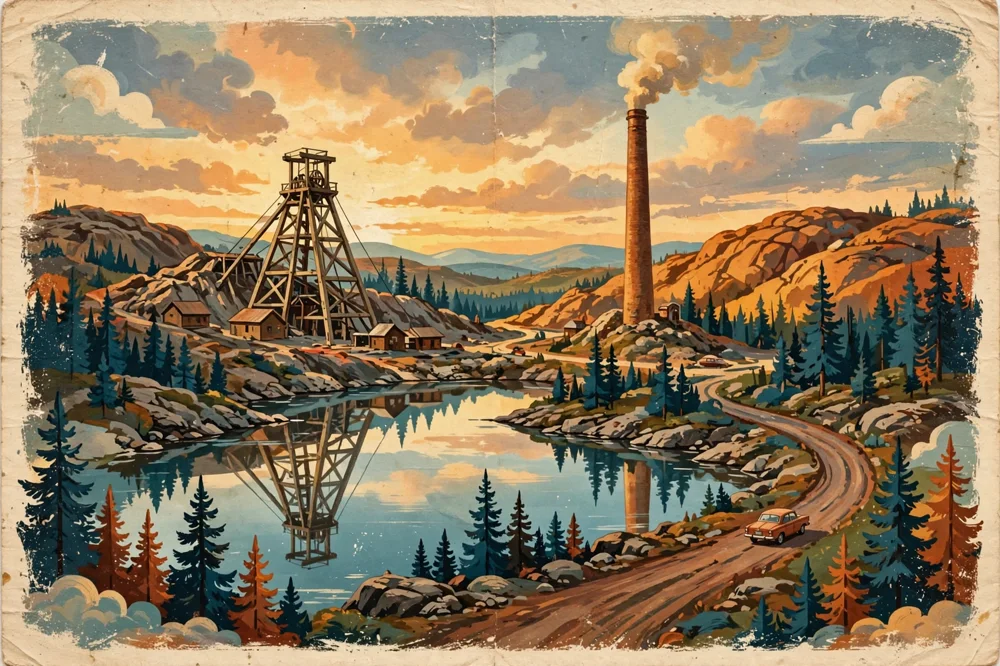
Anybody can spend a nickel. Sudbury framed one and put it on a hill.
Worth the Drive
Stand under the Big Nickel and look up, and then turn around and look out at the rock. The joke lands first — a coin the size of a building! — but the meaning lands second, and it stays. This is a monument to miners built in the shape of the thing they dug out of the earth, raised by a firefighter who believed a working city deserved a landmark as big as its story.
Sixty years on, it is still the best five cents in Canada.
Common Questions
Where is the Big Nickel?
The Big Nickel stands outdoors at Dynamic Earth in Sudbury, Ontario. The coin itself is free to visit, separate from the science centre's exhibits.
How big is the Big Nickel, and which coin does it copy?
It is nine metres, about 30 feet, of stainless steel. The design copies the 1951 Canadian nickel, with King George VI on one side and a nickel refinery ringed by a wreath on the other.
Who built the Big Nickel?
Sudbury firefighter Ted Szilva pushed the idea after it won a local contest, working with local signmaker Bruno Cavallo. It was unveiled on July 22, 1964, before about 2,500 people.
Why does Sudbury honour nickel?
Sudbury sits in the Sudbury Basin, one of the richest nickel deposits ever found, and generations of mines and smelters paid for the town. The 1951 coin also marked two hundred years since the element nickel was first isolated and named.
The Real Thing
More Strange Stops
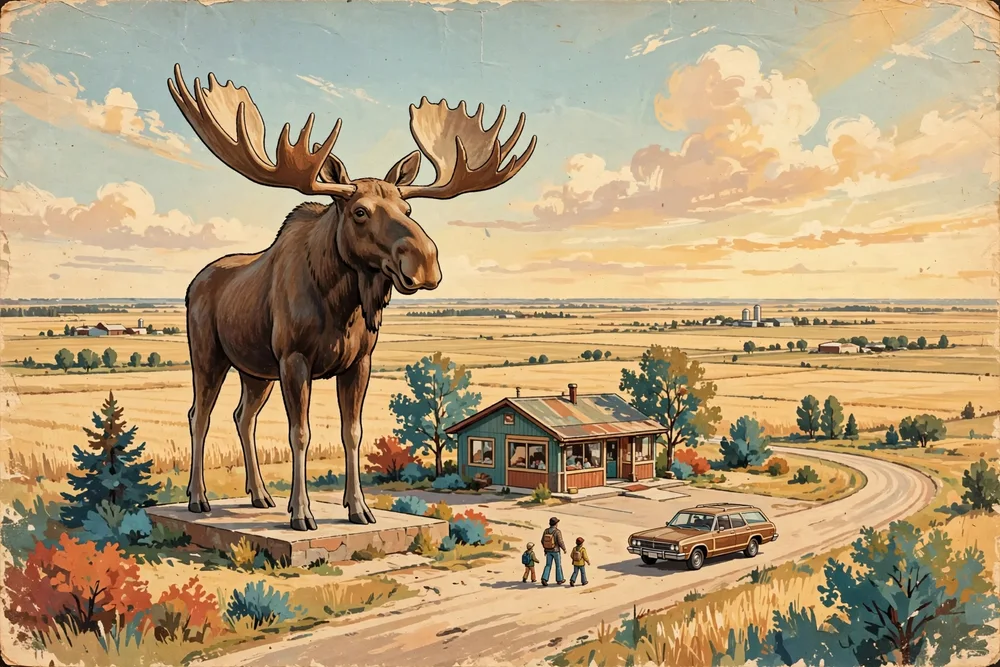
Mac the Moose
Moose Jaw's Mac the Moose has watched the Trans-Canada Highway since 1984 — and when Norway built a taller moose, Saskatchewan answered with bigger antlers.

Falcon Lake: Canada's Strangest UFO Story
In 1967, a Winnipeg prospector walked out of the Whiteshell woods with grid-pattern burns and a story he never changed. You can still hike to the rock.