Field Notes — Alberta
The UFO Landing Pad a Town Built on Purpose
In 1967, while other towns built arenas for Canada's Centennial, St. Paul, Alberta built a landing pad for flying saucers — and welcomed every visitor.
The Short Answer
St. Paul, Alberta built a 130-ton concrete UFO landing pad for Canada's Centennial in 1967, and the town bills it as the world's first. Defence Minister Paul Hellyer officially opened it on June 3, 1967, arriving by helicopter. Visitors can stand in the middle of the outdoor pad year-round and look for the backstop wall's map of Canada and sealed time capsule.
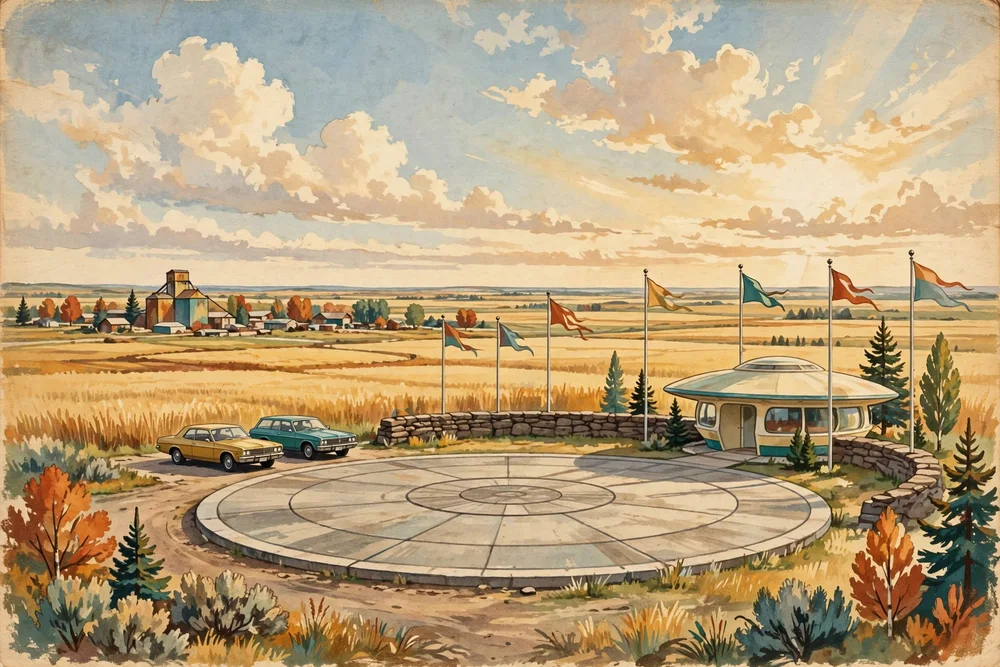
Most towns celebrating a 100th birthday build something sensible. A park. An arena. A nice library, with a plaque.
In 1967, for Canada’s Centennial, the town of St. Paul, Alberta built a landing pad for flying saucers — 130 tons of concrete, poured flat and level and ready, just in case anything up there felt like dropping in.
A Pad for Nobody (Yet)
The pad was one of more than a hundred Centennial projects the town took on that year, which tells you something about St. Paul’s ambitions, and its sense of humour. The town bills it as the world’s first UFO landing pad, and the welcome, set into a sign on the pad itself, is the best piece of municipal writing in Canada:
The area beneath the pad was designated international territory by the town, the sign explains, as a symbol of faith that the universe will stay free of wars and strife — and that all visitors, from earth or otherwise, are welcome in St. Paul.
Not tolerated. Not humoured. Welcome. In 1967, a farming town in northeastern Alberta extended intergalactic hospitality in writing, on a sign, in concrete. The pad has now been standing ready for nearly sixty years. No confirmed landings. No complaints filed either.
Opened by the Minister of Defence
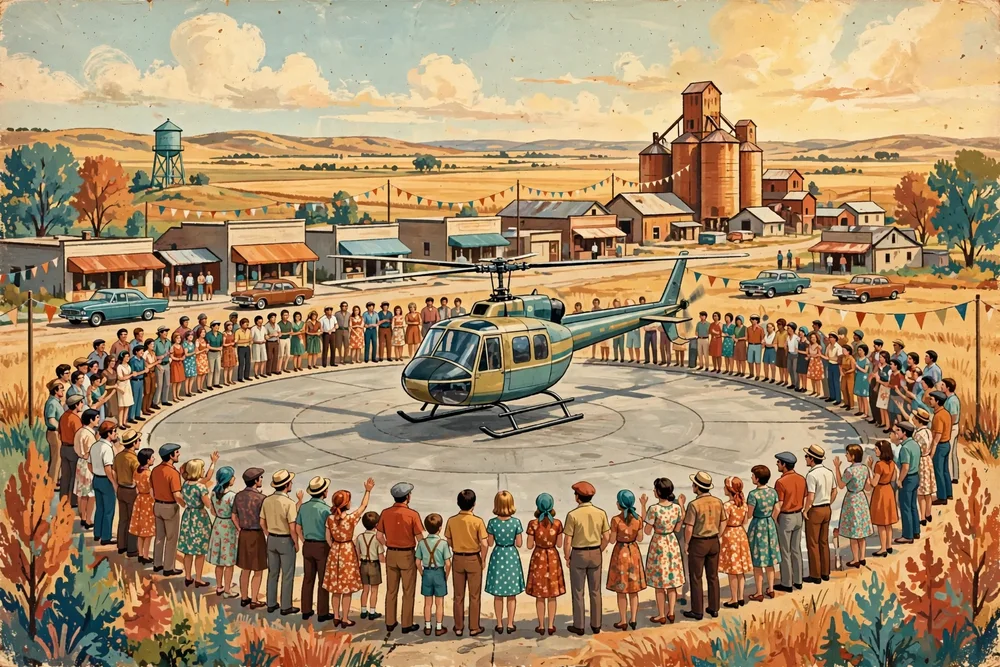
Here is the detail that elevates the whole thing from quirky to magnificent: the pad was officially opened, on June 3, 1967, by Paul Hellyer — Canada’s Minister of National Defence — who arrived the only appropriate way, descending by helicopter onto the pad built for spacecraft. It remains the most distinguished arrival the pad has ever logged.
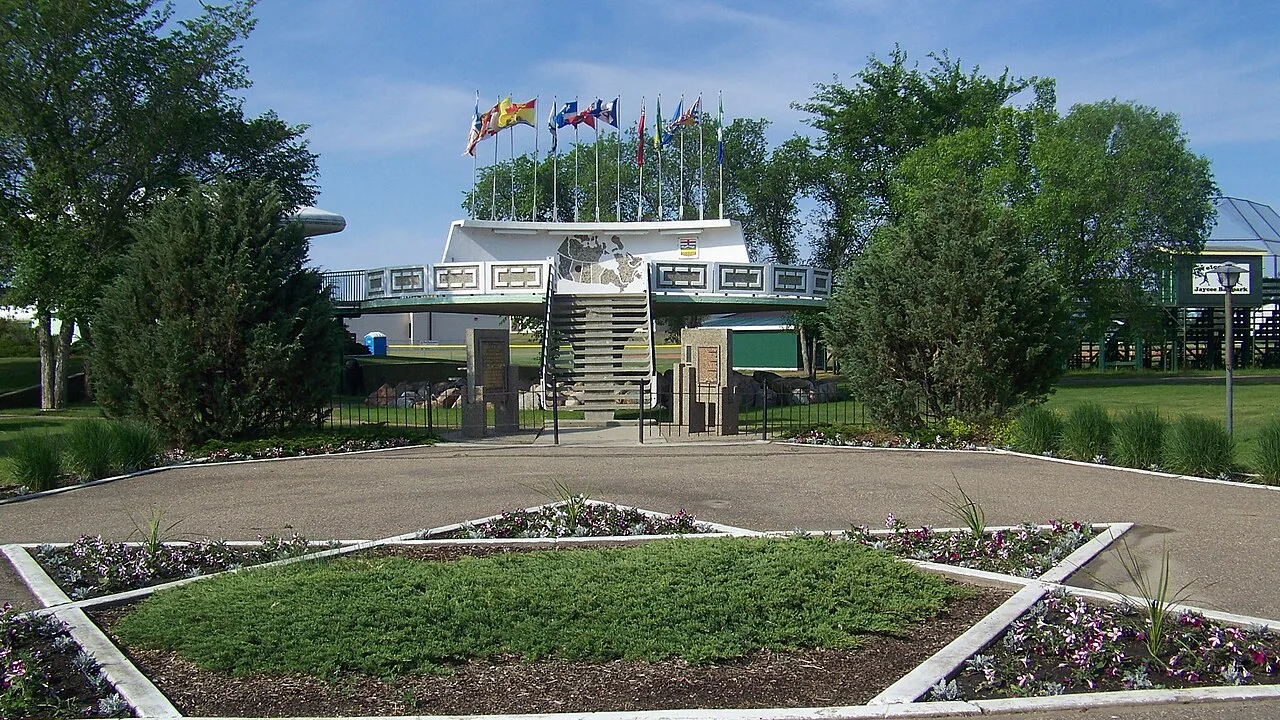
At the opening, St. Paul was declared the Centennial Capital of Canada. Built into the pad’s backstop wall is a map of Canada formed from stones provided by every province, with the provincial flags flying above it — and sealed inside the backstop is a time capsule, addressed to future Canadians, to be opened on June 3, 2067. The town, in other words, is playing a very long game: one hundred years between the welcome mat and the mail.
The Saucer Next Door
A pad alone might have faded into a trivia question. St. Paul didn’t let it. In the 1990s the town opened a tourist information centre right beside the pad — and built the centre itself in the shape of a flying saucer, because of course it did. Inside is a UFO exhibit of photographs of sightings, crop circles, and other unexplained phenomena, alongside a shop stocked by local artisans.
All visitors from earth or otherwise are welcome to this territory and to the Town of St. Paul.
The town describes the pad as a symbol of unity, and the longer you stand on it, the less that sounds like a slogan. The pad wasn’t built to be believed in. It was built to say something about the builders: whoever you are, wherever you’ve come from — however far — there’s room for you here.

Worth the Stop
Stand in the middle of the pad — flat, round, patient — and look up. Every roadside attraction asks you to believe something for a minute. St. Paul’s just asks you to believe that welcome is worth pouring in concrete, on the chance that someday, somebody very far from home might need it.
The pad is ready. The welcome is written. The galaxy knows where to park.
Common Questions
Where is the St. Paul UFO landing pad, and can visitors stand on it?
The pad is an outdoor landmark in St. Paul, Alberta, and visitors can walk out and stand in the middle of it year-round. The saucer-shaped tourist information centre beside it is seasonal and opens for the summer months.
When was the pad built, and who opened it?
St. Paul built the 130-ton concrete pad as a Centennial project in 1967. Canada's Minister of National Defence, Paul Hellyer, officially opened it on June 3, 1967, arriving by helicopter.
Has a UFO ever landed on the pad?
The article reports no confirmed landings. The most distinguished arrival it records is still Hellyer's helicopter on opening day.
What should visitors look for in the backstop wall?
The wall holds a map of Canada made from stones sent by every province, with provincial flags above it. A time capsule sealed inside is addressed to future Canadians and is to be opened on June 3, 2067.
The Real Thing
More Strange Stops
Mac the Moose
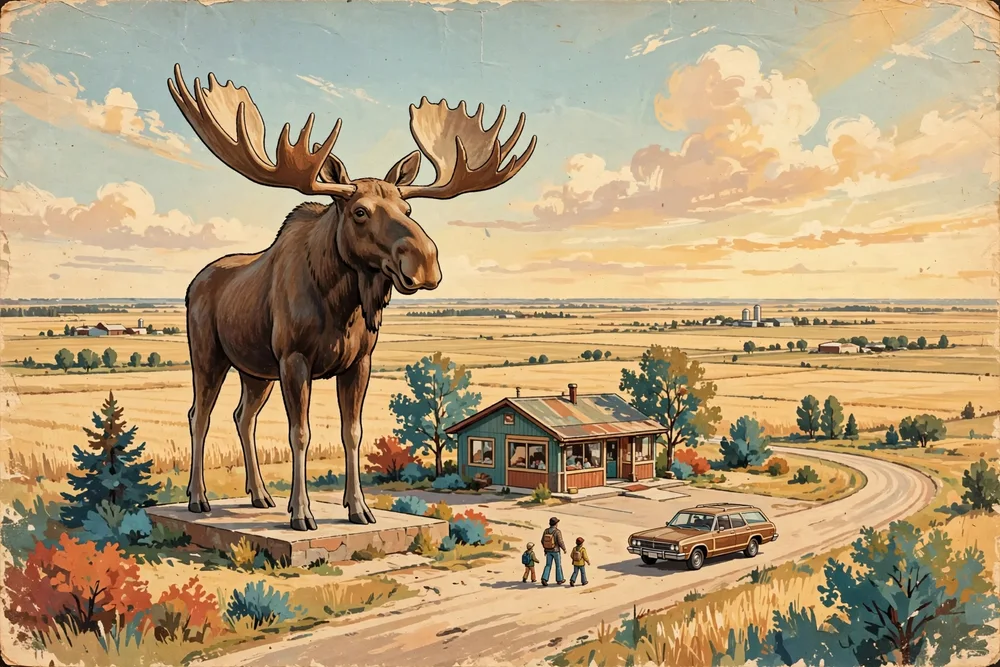
Moose Jaw's Mac the Moose has watched the Trans-Canada Highway since 1984 — and when Norway built a taller moose, Saskatchewan answered with bigger antlers.

Falcon Lake: Canada's Strangest UFO Story
In 1967, a Winnipeg prospector walked out of the Whiteshell woods with grid-pattern burns and a story he never changed. You can still hike to the rock.