Field Notes — Yukon
The Sign Post Forest
In Watson Lake, Yukon, a homesick soldier's single sign in 1942 grew into a forest of an estimated 100,000 signs from everywhere on Earth.
The Short Answer
The Sign Post Forest is an outdoor collection of signs along the Alaska Highway in Watson Lake, Yukon. It began in 1942 when homesick American soldier Carl K. Lindley added a Danville, Illinois board to a repaired signpost. Estimates now put the collection past 100,000 signs, and travellers stop to wander the posts and, if they wish, add a sign of their own.
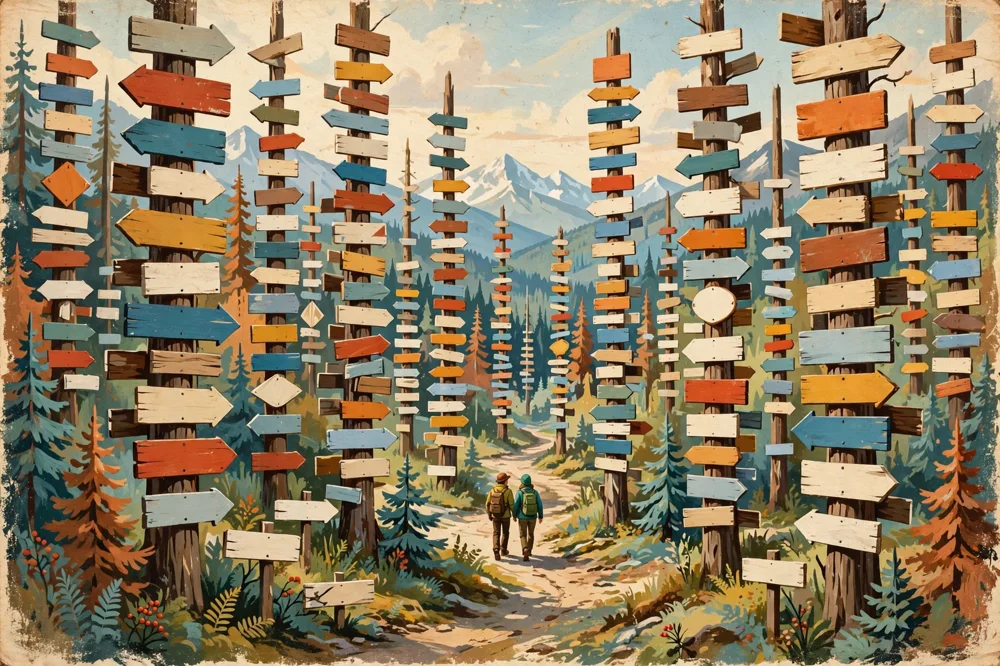
There is a forest in the Yukon that isn’t made of trees.
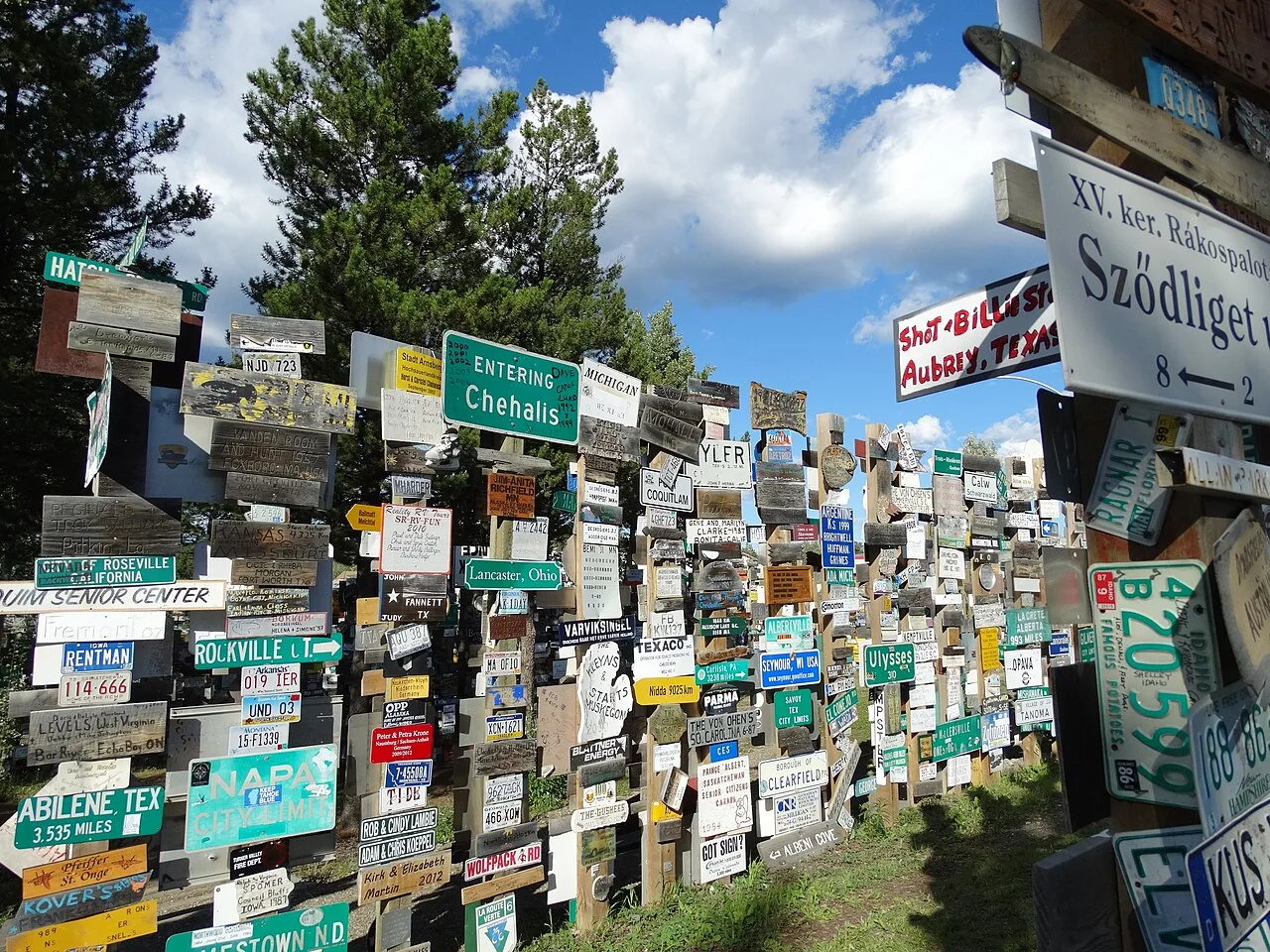
In Watson Lake, along the Alaska Highway, the spruce give way to something stranger: row after row of tall wooden posts, every one of them covered top to bottom in signs. Town signs, street signs, licence plates, hand-painted boards from every corner of the planet — a couple of acres of pure, joyful clutter, pointing in every direction at once.
Estimates now put the collection past 100,000 signs, and nobody can tell you the exact number, because it grows every single summer. It all started with one soldier who missed home.
One Homesick Soldier, 1942
In 1942, the United States Army was driving the Alaska Highway through the northern wilderness — a wartime supply road from Dawson Creek, British Columbia, up to Alaska, built at astonishing speed through bush, muskeg, and mountains. Among the thousands of soldiers on the job was Private Carl K. Lindley of Company D, 341st Engineers, from Danville, Illinois.
Lindley was injured while working on the highway and sent to the aid station at Watson Lake to recover. Given light duties, he was ordered to repair and repaint a directional signpost that a bulldozer had knocked about. He fixed the post. And then, being about as far from Illinois as a young man could be, he added one small board of his own:
Danville, Ill. — 2,835 miles.
It may be the most consequential act of homesickness in Canadian roadside history.
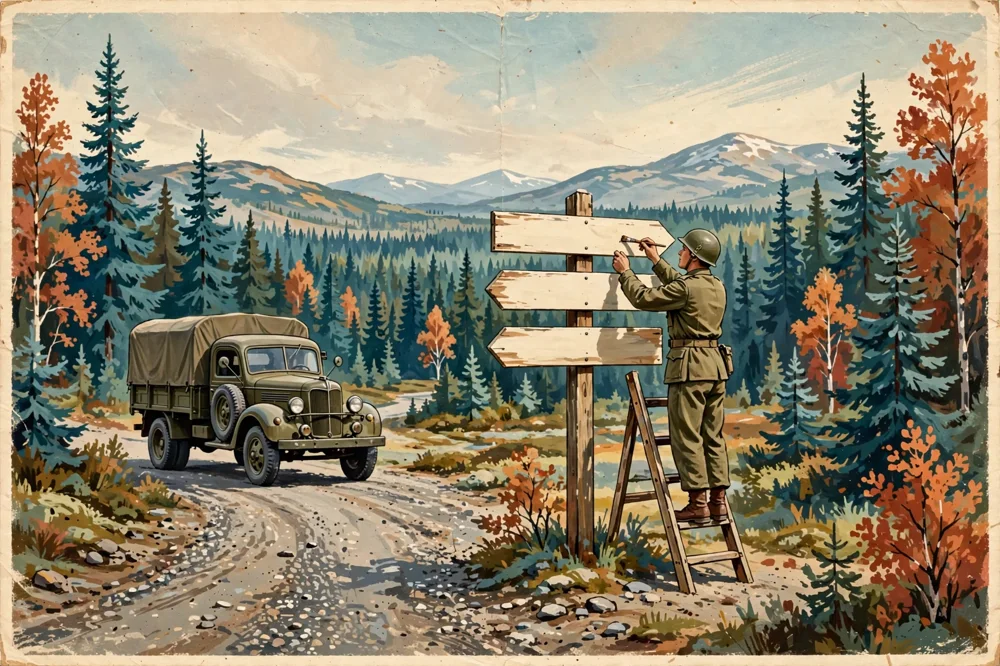
The Idea That Wouldn’t Stop Growing
Other soldiers saw Lindley’s sign and understood it instantly. They added their own hometowns. Then the road crews did. Then the highway opened to the public, and travellers driving north began arriving with signs of their own — town boards, family nameplates, licence plates, the occasional street sign of mysterious provenance.
The Town of Watson Lake took the forest under its wing, maintaining the posts and adding new ones as the collection overflowed. Wander it today and you’ll find signs from every Canadian province and territory, every American state, and countries around the world — a German autobahn sign is said to be among the residents — each one left by somebody who stood in this exact northern spot and thought about somewhere else they loved.
It is, when you stop and think about it, a monument built entirely out of missing places.
You Can Still Add Yours
Here is the best part: the forest is not finished, and it isn’t meant to be. Visitors are still welcome to add a sign of their own, and many do — some plan their whole Alaska Highway drive around the board riding in the back of the truck. The visitor information centre beside the forest can help you make one on the spot.
There are grander monuments in this country, and older ones, and certainly tidier ones. But there may be no other place in Canada where the exhibit is the visitors — eighty-some years of travellers, each leaving a small wooden sentence that says the same thing:
I was here, and home is that way.
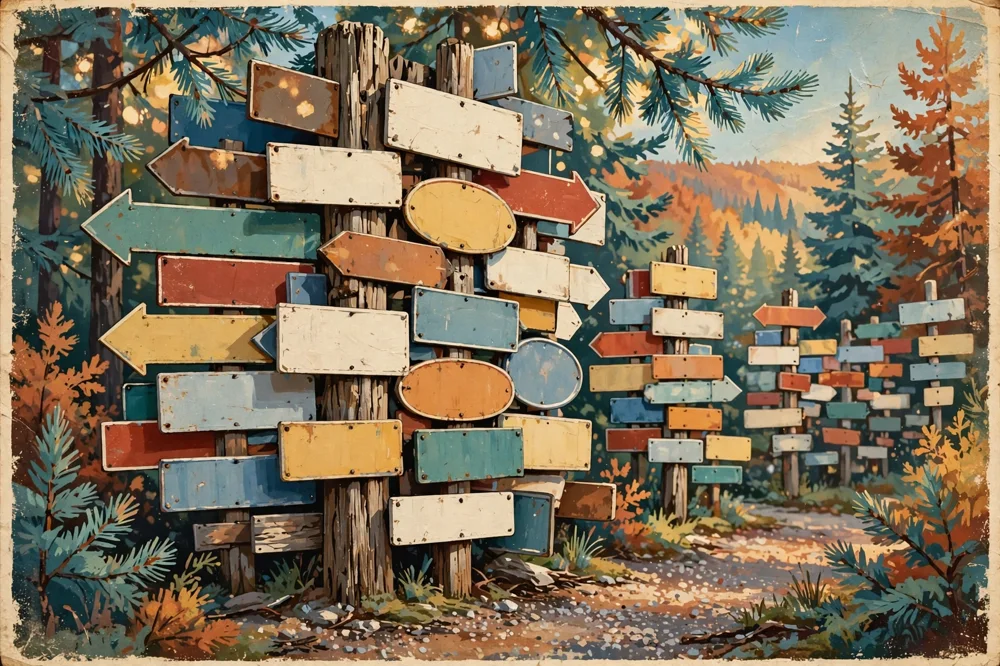
One man pointed at home. A hundred thousand travellers pointed back.
Worth the Drive
Stand in the middle of the Sign Post Forest at the height of a Yukon summer evening, when the light goes gold and just refuses to end, and read the boards. Paris. Perth. A hundred little towns you’ve never heard of and a few you have. It is the whole travelling world, nailed to posts in a small northern town — begun by a homesick kid with a paintbrush, and still growing, one hometown at a time.
Bring a sign. There’s room.
Common Questions
Where is the Sign Post Forest?
It stands right on the Alaska Highway in Watson Lake, Yukon. The article describes it as a free outdoor site best taken slowly on foot.
How did the Sign Post Forest begin?
In 1942, injured American Army private Carl K. Lindley was given light duties repairing a directional signpost at Watson Lake. He added his own board for Danville, Illinois, marked 2,835 miles away.
How many signs are in the forest?
Estimates now put the collection past 100,000 signs, but there is no exact count because it grows every summer. The signs include town boards, street signs, licence plates, and hand-painted boards from around the world.
Can travellers add their own sign?
Yes. Visitors can bring a board from home or make one at the visitor information centre beside the forest, and the town maintains the posts as the collection grows.
The Real Thing
More Strange Stops
Mac the Moose
Moose Jaw's Mac the Moose has watched the Trans-Canada Highway since 1984 — and when Norway built a taller moose, Saskatchewan answered with bigger antlers.
Falcon Lake: Canada's Strangest UFO Story
In 1967, a Winnipeg prospector walked out of the Whiteshell woods with grid-pattern burns and a story he never changed. You can still hike to the rock.